
 The Coach Space
Tennis combines cardiovascular exercise, strength, coordination, and quick decision-making in one activity. Unlike workouts built around repeating the same movement, every rally requires changes in speed, direction, balance, and body position.
That makes tennis adaptable across different stages of adulthood. Intensity can be increased for a demanding singles workout or reduced through doubles, shorter sessions, and recreational play.
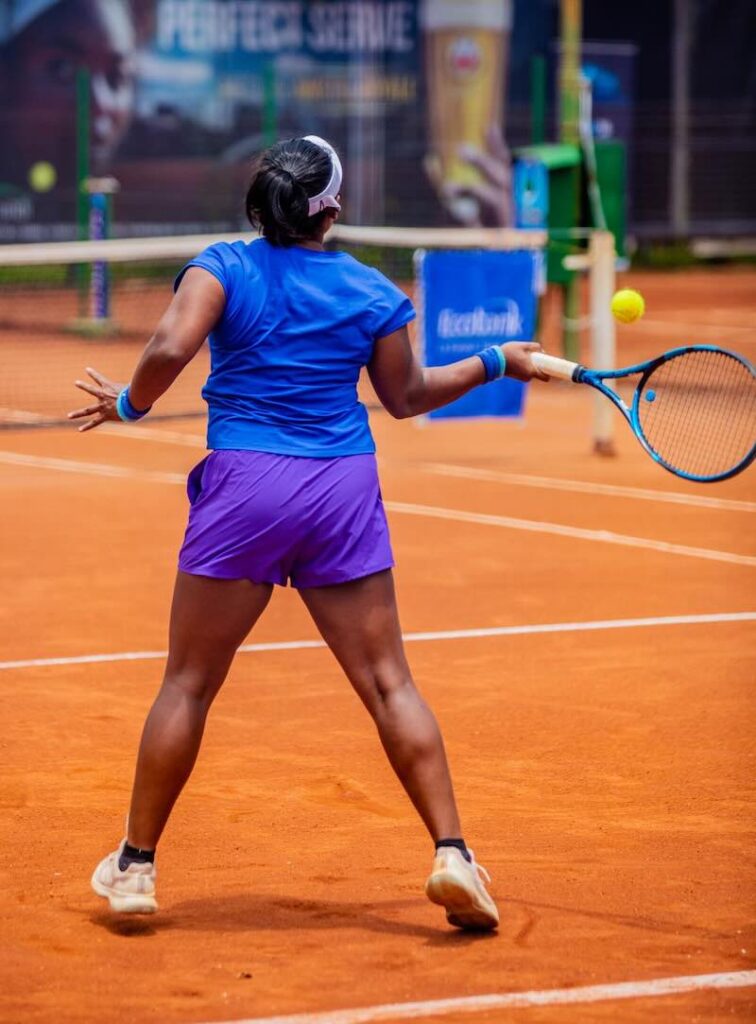
Tennis Provides Interval-Style Cardio
Tennis naturally alternates between short periods of movement and brief recovery.
During a point, players accelerate toward the ball, change direction, recover toward the center of the court, and prepare for the next shot. Between points, heart rate has time to fall before activity begins again.
This creates an interval-style cardiovascular workout without requiring a treadmill or structured circuit.
Singles generally demands more court coverage, while doubles reduces the distance each player needs to cover. That gives women a practical way to adjust intensity according to fitness level, experience, and age.
The CDC recommends that adults accumulate at least 150 minutes of moderate-intensity aerobic activity or 75 minutes of vigorous activity each week, alongside muscle-strengthening exercise. Its physical activity guidance for adults also makes clear that activity can be divided across the week rather than completed in long sessions.
It Challenges the Whole Body
Tennis is not only an arm workout.
Groundstrokes involve force moving through the legs, hips, trunk, shoulder, and arm. Serving adds rotational movement and overhead force, while court movement repeatedly loads the calves, quadriceps, glutes, and muscles around the hips.
Players also spend considerable time decelerating. Stopping after a wide ball requires the lower body to control momentum instead of simply producing it.
Tennis Still Needs Strength Training
Tennis should not replace resistance exercise entirely.
Supporting it with strength work can improve movement quality and build capacity in areas that experience repeated loading.
Useful areas to train include:
- Glutes and quadriceps
- Hamstrings and calves
- Core and rotational muscles
- Upper back and shoulders
- Forearms and grip
Two strength sessions each week can complement court time without requiring complicated programming.
Weight-Bearing Movement Supports Bone Health
Bone health becomes increasingly important for women as they age.
Tennis is a weight-bearing activity. Running, pushing off, landing, and changing direction place mechanical load through the lower body, which is different from non-weight-bearing activities such as swimming.
The CDC identifies improved bone health as one of the long-term benefits of regular physical activity. It also notes that physical activity can improve balance and coordination, which becomes particularly important later in life.
Women who are new to tennis should build volume gradually. Sudden increases in court time can place more stress on feet, ankles, knees, and lower legs than the body is prepared to handle.
Tennis Develops Balance and Coordination
A ball rarely arrives exactly where you want it.
Players continually adjust their feet, body position, racket angle, and timing based on speed, spin, bounce, and court location. That makes tennis a coordination challenge as much as a fitness activity.
Footwork requires lateral movement, forward acceleration, backward recovery, and rapid repositioning.
These skills can be trained at different intensities. A beginner does not need to chase every ball at maximum speed to benefit. Controlled rallying and doubles still require balance, anticipation, and movement in several directions.
Use a Progressive Starting Approach
Women returning to exercise can begin with:
- Short rally sessions
- Doubles rather than singles
- Mini-tennis on a smaller court
- Longer recovery between points
- One or two sessions per week
- Gradual increases in playing time
Consistency matters more than starting with high intensity.
It Can Improve Reaction and Decision-Making
Tennis requires constant information processing.
Players need to recognize where the ball is going, estimate its speed and spin, decide which shot to use, position their body, and execute the stroke within seconds.
The process repeats throughout every rally.
That mental involvement can make tennis more engaging than exercise where the movement pattern remains predictable. Players are concentrating on the point rather than counting minutes of cardio.
The CDC notes that regular physical activity supports brain health and can help maintain thinking, learning, and judgment as people age.
The Workout Can Change With Age
One reason tennis can remain useful for decades is that the game does not have to be played at one intensity.
A woman in her twenties may prefer competitive singles and longer matches. Later, doubles, recreational rallies, or shorter sessions may provide a more manageable workload while preserving movement and social interaction.
Equipment can also help. Lower-compression balls travel more slowly and can make rallies easier for beginners or players who want to reduce pace.
Court surface matters as well. Different surfaces affect speed, traction, and how the body absorbs repeated stops and starts.
The goal is to adapt the game rather than assume the same training volume should apply at every stage of life.
Tennis Adds a Social Reason to Exercise
Exercise programs often fail because people stop doing them.
Tennis has a built-in social component that can make regular activity easier to maintain. Lessons, doubles groups, recreational leagues, and weekly matches create a scheduled reason to show up.
Teams, clubs, or groups that play together can strengthen that sense of belonging with custom tennis shirts.
There is also a skill component. Players can work on serving, footwork, consistency, placement, or strategy, giving each session a purpose beyond burning calories.
That combination is what makes tennis particularly useful as a long-term fitness activity.
It can challenge cardiovascular fitness, muscles, bones, coordination, and reaction speed while remaining adjustable to individual ability. The best version is not necessarily the fastest or most competitive one. It is the version that keeps you moving safely and makes you want to return to the court.


Add comment