

 Holly Roberts
For many expatriates autumn is the time of year we find ourselves taking the first steps on a new path, building a new life in a new location. For me, it evokes memories of our arrival in Madrid, and before that in Buenos Aires, and before that in Beijing. The early days of getting to grips with new surroundings, the painful ‘starting from zero’ sensation, and the empty time that seemed to stretch before me, without definition or colour.
Reflecting on this heightens my awareness of two things: first, how far I have come, what a rich and textured life I have built with my family in a city that in our own way we have made ours, and secondly the fact that we are completing the cycle for one last time as we will be moving on again in just nine months’ time.
Expatriation is an emotional process, full of excitement, anticipation, expectation, loss, grief, isolation, happiness, vulnerability, curiosity and so many other shades in between. Before a move, time seems to rush towards us at pace, only to then shudder to a standstill, suspending us in limbo as we grapple with the new environment and orientation.
Your emotions are a guidance system for you. Pay attention to the way that you are feeling because underneath every emotion is a very powerful personal truth.
Teal Swan
As a coach I work with my clients to build up their emotional dexterity, so that how they feel is not blocked, suppressed or hidden, but on the contrary accepted and perhaps even learned to be welcomed. The transition curve developed by Dr. Elisabeth Kubler-Ross illustrates the seven stages or emotional states we pass through in a period of great change. Especially in the early stages, many are emotions we have a tendency to classify internally as negative or unwelcome:
- Shock
- Denial
- Frustration
- Depression
- Experiment
- Decision
- Integration
How do we feel about shock, denial, frustration and depression? Are these emotions we want to sign up for? If we search a little deeper into our beliefs we may find ourselves ascribing judgements to those emotions like ‘It’s just no good for me to constantly feel this frustrated’, or ‘What’s wrong with me? I should be feeling excited by all this but I just don’t’. Perhaps others around us throw in how they think we should be feeling into the mix. What impact does all this have?
RELATED: 5 Self Care Ideas for Dealing with Life’s Big Surprises
The first principle of emotions coaching is that emotions are neither good nor bad. All the emotions have value, and we can learn from them. Crucially, emotions are meant to flow. The word comes from the word ‘emovere’ meaning to move, move out or move through. Blocking them, controlling them, hiding them, or denying them through learned behaviour only shuts down our connection with ourselves and limits our ability to learn, and often keeps us trapped in a negative loop.
So how can we change the way we see emotions, and allow ourselves to ‘feel all the feels’ and learn from them when going through an expatriation?
Increase your self awareness
Pay close attention to how you are feeling. What emotions are coming up for you? Use a feelings wheel to help you interrogate and clarify your feelings. You might think you are feeling sad but when you drill down into it, you realise you are actually feeling isolated. You might feel frustrated but realise you are feeling unrecognised.
Ask yourself, what does that emotion of isolation need? The answer might be connection, so you could think about what connection means to you and ways you could help yourself feel better connected.
Question your beliefs
Learn not to judge your emotions. Allow yourself to go deeper into the thoughts and beliefs that are connected to how you feel. Think about what beliefs you have around that emotion and then ask yourself, is this an empowering belief, or its opposite? Think about what empowering belief you could create that would allow you to counter and perhaps even value an emotion that feels challenging or oppressive.
Process
How did you process your feelings as a child? I tended to channel everything into music, through singing, playing and songwriting. Returning to this, especially in times of challenge, has helped me to nurture this connection with myself, which becomes a form of self-soothing and helps to build resilience. In adulthood I have also developed different self-care practices to help maintain my balance and connection.
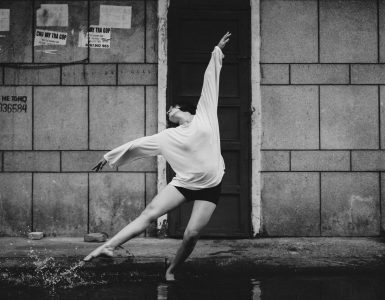
What helps you to open this connection? Is it dance, walking in nature, writing, or something else?
It is inevitable that you will move through different stages as you navigate your new life, some days will be better, and some days will be worse. Being aware of this and taking the time to pay attention to your emotions and their significance will help you to move to a place of acceptance and integration.
If any of this resonates and you want to reach out to someone who has been there, please reach out, you are not alone.

Add comment