
 The Coach Space
Financial markets may seem complex, yet they follow clear rules. Every day, people and institutions buy and sell assets such as stocks, bonds, currencies, and commodities. Prices move based on supply and demand, as well as news and economic data.
Trading works by matching buyers and sellers through exchanges or digital platforms, where prices change in real time based on supply and demand. A trader opens an account, places an order, and the market fills that order at the best available price. As a result, each trade helps set the current market value of an asset.
Today’s markets rely on fast technology and online platforms. Traders use data, charts, and financial reports to guide each decision. This article explains the basic rules of trading and shows how modern tools shape the way markets operate today.
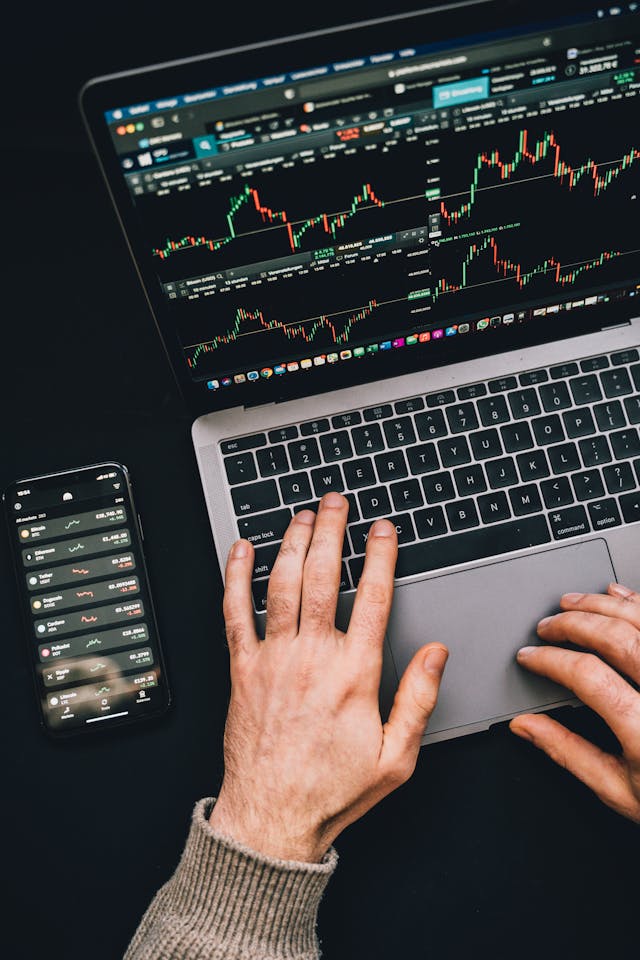
Fundamentals of Trading in Financial Markets
Trading in modern markets follows clear rules for order execution, market structure, and participant roles. Prices move because buyers and sellers place orders through electronic systems that match supply and demand in real time.
How Trades Are Executed
A trade starts with an order. A trader selects an asset, sets the order type, and sends it through a broker’s platform to an exchange or liquidity provider.
The two most common order types are market orders and limit orders. A market order fills at the best available price. A limit order fills only at a set price or better. Therefore, market orders focus on speed, while limit orders focus on price control.
Exchanges and electronic networks match buy and sell orders through an order book. The book lists bids and asks at different price levels. The highest bid and lowest ask form the current quoted price.
Most platforms route orders in milliseconds. Many traders use online platforms that provide tight spreads and fast execution, such as https://www.tradetaurex.com/ , https://www.etoro.com/trading/cfd, which connect users to global markets through digital systems.
After execution, the trade moves to clearing and settlement. Clearing confirms the trade details. Settlement transfers cash and assets between parties, often within two business days for stocks.
Types of Financial Markets
Financial markets fall into clear categories based on the assets they trade.
Stock markets allow investors to buy and sell shares of public companies. These trades often take place on centralized exchanges, which increases liquidity and price transparency.
Forex markets focus on currency pairs such as EUR/USD. This market operates 24 hours a day across major financial centers. Traders use it for speculation, hedging, or international business payments.
Commodity markets trade physical goods like oil, gold, and wheat, often through futures contracts. In addition, derivatives markets trade contracts whose value depends on another asset, such as options or futures.
Each market has its own hours, rules, and risk profile. As a result, traders choose markets that match their goals, capital, and risk tolerance.
Major Trading Participants
Several groups shape price movements and market activity.
Retail traders use personal funds to trade through online brokers. They often trade stocks, forex, or crypto in smaller position sizes.
Institutional investors include pension funds, mutual funds, and hedge funds. They manage large pools of capital and can move prices due to the size of their orders.
Market makers quote both buy and sell prices. They provide liquidity and help reduce the gap between bid and ask prices. In return, they earn from the spread.
In addition, brokers and platforms connect traders to exchanges and liquidity providers. They handle order routing, margin accounts, and risk controls. Each participant plays a defined role, and together they create the price discovery process that drives modern financial markets.
Modern Trading Practices and Technologies
Today’s markets rely on fast digital systems, automated strategies, and strict oversight. Technology moves orders in milliseconds, while regulators set rules that shape how traders act and manage risk.
Role of Electronic Trading Platforms
Electronic trading platforms connect buyers and sellers through digital order books. Traders place market, limit, and stop orders through software on a computer or mobile device. The system then matches orders based on price and time priority.
As a result, trades execute in milliseconds instead of minutes. This speed reduces manual errors and lowers transaction costs. It also gives retail investors direct access to stocks, bonds, futures, and currencies without a physical trading floor.
In addition, platforms display real-time data such as bid and ask prices, trade volume, and price charts. This transparency helps traders compare prices across venues and react quickly to new information.
However, fast access also means prices can change in seconds. Traders must monitor positions closely and use risk controls such as stop-loss orders to limit losses.
Algorithmic and High-Frequency Trading
Algorithmic trading uses computer programs that follow set rules to place trades. These rules may track price trends, volume changes, or statistical patterns. The system scans market data and sends orders without human input.
High-frequency trading is a form of algorithmic trading that sends a large number of orders at very high speed. Firms use powerful computers and direct data feeds to reduce delay. Even small time advantages can affect profits.
For example, an algorithm may buy a stock on one exchange and sell it on another if it detects a small price gap. This process can narrow price differences across markets.
However, automated strategies can also increase short-term volatility. Rapid order flow may lead to sharp price moves during stress. Therefore, many markets apply limits such as circuit breakers to pause trading if prices swing too far in a short time.
Impact of Regulation on Trading
Regulation shapes how modern trading systems operate. After the 2008 financial crisis, regulators increased oversight of risk controls and market transparency. They required better reporting of trades and stronger capital standards for many firms.
In addition, rules now address algorithmic trading practices. Some markets require firms to test algorithms before use and to keep records of order activity. These steps help supervisors review unusual price moves.
Regulators also use tools such as trading halts and price bands. If a stock moves beyond a set range, the exchange can pause trading. This pause gives participants time to assess new information.
As a result, regulation seeks to balance innovation with market stability. Traders must understand both technology and the legal framework that governs their activity.
Conclusion
Trading in today’s financial markets works through clear price discovery, fast order execution, and constant shifts in supply and demand. Traders use data, tools, and risk rules to decide when to buy or sell, and each trade helps set market prices.
Success depends on discipline, risk control, and market knowledge, not luck or emotion. Those who understand how markets function, how orders move, and how prices react to news can make informed decisions and control risk with greater confidence.


Add comment