
 The Coach Space
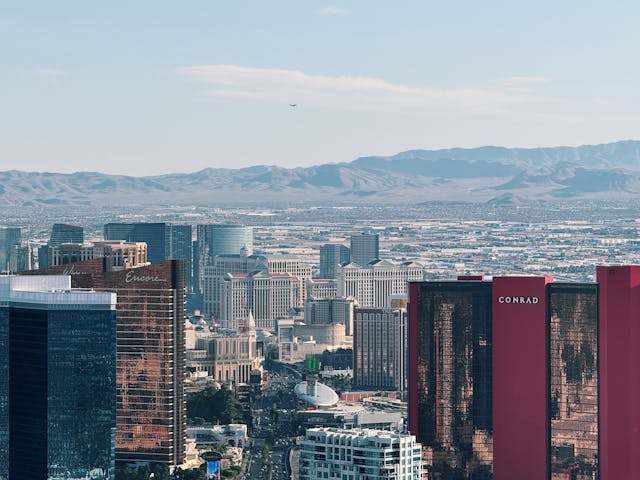
Most business origin stories follow a familiar arc: an idea, a garage, a lucky break. The Realty ONE Group story does something a little different. It started in a city built entirely on the premise that the house rules can be rewritten, and it used that spirit to do something the real estate industry hadn’t quite seen before.
In 2005, Kuba Jewgieniew launched Realty ONE Group in Las Vegas with what he called an UNbrokerage model. The name was deliberate. Instead of the traditional commission split, where agents hand a significant portion of every deal back to the brokerage, the model flipped the structure: agents pay a flat transaction fee and keep 100% of their commission. Within the first seven months, 250 realtors had joined. By 2009, the company appeared on the Inc. 500 list as one of the fastest-growing private companies in America.
That origin point matters because Las Vegas, whatever else it is, is a city that understands leverage. It understands what happens when you redesign the rules of a game that everyone else assumed were fixed.
The Commission Model That Changed the Conversation
The traditional real estate brokerage takes a percentage cut of every transaction its agents close. That cut, typically somewhere between 30% and 50%, gets packaged as the price of access: to the brand, the training, the tools, the leads. Agents accepted it because the alternative, starting completely from scratch, seemed harder.
What Jewgieniew built was a third option. You get the brand, the technology, the coaching infrastructure, and a global referral network, and you keep what you earn. The company takes a flat fee per transaction. As the model scaled, it attracted agents who were already capable but tired of splitting their earnings with a structure that didn’t evolve alongside them.
By the time Realty ONE Group launched its franchise division in 2012, selling the first franchise in Temecula, California, the internal logic was already proven. The question had shifted from “does this model work” to “how many markets can it move into.”
What a Real Estate Franchise Actually Means for an Owner
This is where the practical reality becomes interesting, and where a lot of people who are considering ownership for the first time get the picture wrong.
Owning a real estate franchise is not the same as being a real estate agent. The role is entrepreneurial in the truest sense: you are recruiting and retaining talent, building a culture, managing a business, and leveraging a system that has already been tested across hundreds of markets. The Realty ONE Group franchise model is structured around this owner-as-leader framework rather than owner-as-agent.
The distinction is significant. Many experienced real estate professionals who investigate franchise ownership come in assuming the job is an extension of what they already do. It isn’t. It’s a different kind of work: one that involves coaching others to win, building systems for recruitment, and creating an environment that agents want to stay in. Realty ONE Group calls this the YOU-first focus, meaning the franchisor’s success is measured by the success of its franchisees and their agents, not the other way around.
RELATED POST
The Numbers Behind Franchise Ownership
For anyone thinking seriously about whether a franchise structure makes sense as a business decision, the data provides useful context. Independent businesses fail at a rate of roughly 50% within five years, while franchised businesses tend to perform meaningfully better across that same window. The franchise model doesn’t eliminate risk, but it reduces the specific risks that come from building every system from nothing: brand recognition, operational process, supplier relationships, technology infrastructure, and training.
What Realty ONE Group adds to that foundation is a coaching layer that is embedded into the model itself. Agents within the network have access to ONE University, a training and education platform, along with tools, marketing support, and a referral network that now spans nearly 30 countries and more than 450 locations. For a franchise owner, that infrastructure is the product you’re offering your agents, which is what determines whether you recruit and retain the kind of talent that builds a sustainable business.
From Las Vegas to 25 Countries
The international expansion tells you something about the portability of the model. International growth didn’t begin until 2016 with Canada, then accelerated in 2021 with Spain, Costa Rica, and Singapore. By 2022, the company was selling 38 new franchises in a single half-year period and adding thousands of agents across nine countries.
That kind of growth isn’t primarily a marketing story. It’s a systems story. A model that depends on personality or local charisma doesn’t replicate that cleanly across jurisdictions, languages, and entirely different property markets. What travels is the commission structure, the coaching platform, and the culture, which is why the company has put considerable emphasis on building what it calls its COOLTURE into the franchise offering rather than treating it as a side consideration.
Realty ONE Group has been named the number one real estate franchise by Entrepreneur Magazine for consecutive years, and it holds a position in the top 1% nationally by REAL Trends. Those are not self-reported figures; they are third-party rankings based on transaction volume and growth metrics.
What Ownership Looks Like in Practice
People who move into business ownership from a career in real estate typically spend years developing client relationships, market knowledge, and negotiation skills. What they often haven’t developed is experience on the ownership side: setting expectations for a team, holding people accountable without losing them, understanding the difference between being busy and building something.
That gap is real, and it’s why the coaching component within a franchise like this carries practical weight beyond the marketing copy. The structure of a franchise gives you a system to run. The coaching infrastructure gives you a model for developing the people inside it. Whether that translates into a profitable operation still depends on the owner, but the inputs are more defined than building from zero.
The model also has an unusual feature worth noting: it was designed by a real estate agent, not a property developer or a private equity firm looking to extract value from a network. Jewgieniew was a working agent who understood what agents actually needed. That starting point shaped the priorities of the company in ways that are still visible in how the franchise is structured today.
The Practical Case for Investigating This Seriously
The question of whether franchise ownership is the right move is not one anyone can answer from the outside. It depends on capital, on market, on temperament, on what kind of work someone actually wants to be doing in five years. But the career transition to entrepreneurship is almost always more concrete when there is a proven structure to step into rather than a blank canvas.
What Las Vegas built, starting in 2005 with a single office and a flat-fee model that most of the industry thought was naive, is now a global operation that keeps growing because the underlying logic held up across markets, recessions, and industry disruption. That’s not luck. That’s a blueprint.


Add comment