
 The Coach Space
When people think about personal growth, the focus is often internal. Mindset, habits, discipline, emotional awareness, these are the areas most commonly associated with change. And while they are undeniably important, there is another factor that often goes unnoticed: the environment in which that growth takes place.
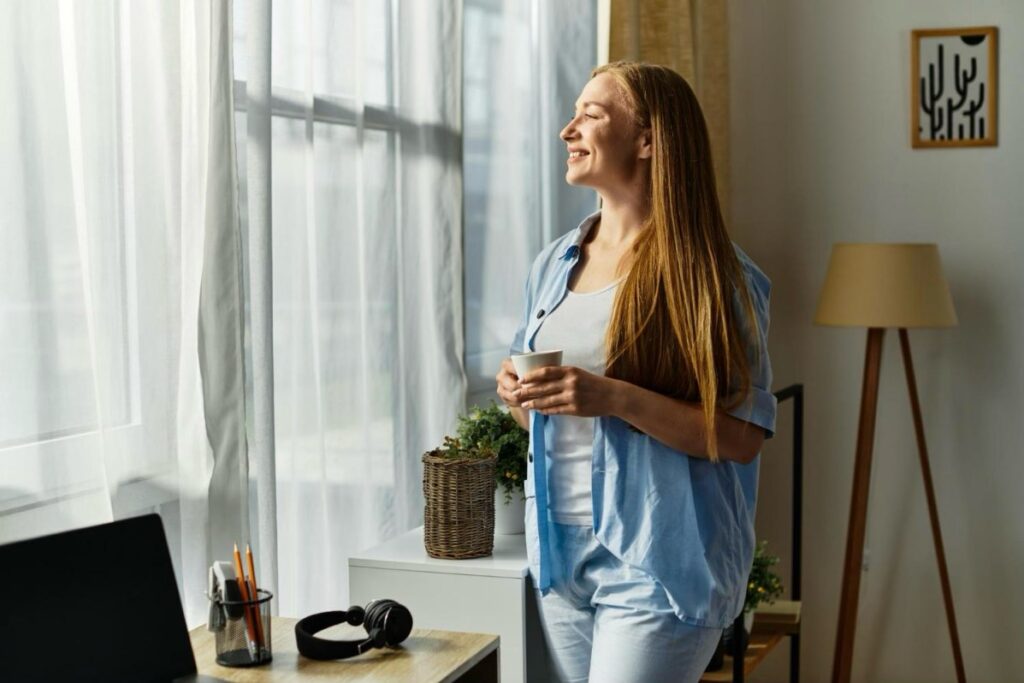
The spaces we live and work in are not neutral. They influence how we think, how we feel, and how we behave, often in subtle but consistent ways. Over time, these influences shape routines, reinforce habits, and either support or hinder progress.
Understanding this connection is not about aesthetics alone. It is about alignment.
The Environment as a Silent Influence
Every environment sends signals. A cluttered desk suggests unfinished tasks. A poorly lit room can lower energy levels. A disorganised space creates friction, making even simple actions feel more difficult.
On the other hand, a well-structured environment can support clarity. When everything has its place, attention is freed up for more meaningful work. Decisions become easier, and distractions are reduced.
This is not about perfection. It is about creating conditions that make the desired behaviour the easier choice.
External Order and Internal Clarity
There is a reason why people often feel a sense of relief after organising their space. The act itself is physical, but the effect is psychological.
By reducing visual noise, the mind is given fewer inputs to process. This creates a sense of calm that can translate into improved focus and decision-making.
According to the Princeton University Neuroscience Institute, clutter competes for attention and reduces the brain’s ability to focus effectively. When the environment is simplified, cognitive resources can be directed toward tasks that matter.
This connection highlights an important point: personal development does not happen in isolation. It is influenced by the context in which it occurs.
Designing Spaces That Support Action
One of the most effective ways to align the environment with intention is to design spaces around specific actions. Instead of creating generic areas, each space can serve a clear purpose.
A workspace, for example, should encourage focus. This might involve minimising distractions, choosing functional furniture, and ensuring that everything needed for work is easily accessible.
Physical structure plays a key role here. Even something as simple as a desk can influence posture, comfort, and how long a person is able to remain engaged in a task.
Creating a greater sense of space and light within a room can itself support action. One way to achieve this is through furniture that ‘floats’. Accessories from The Hairpin Leg Company let light flow underneath and make a space feel more open and less visually heavy.
Reducing Friction in Daily Habits
Habits are often framed as matters of discipline, but the environment plays an equally important role. When an action requires unnecessary effort, it becomes less likely to be repeated.
This is where thoughtful design can make a difference. Placing items where they are easily accessible, removing obstacles, and creating clear pathways for action all contribute to habit formation.
For example, a workspace that is always ready for use reduces the barrier to starting. There is no need to set up or adjust, action can begin immediately.
These small efficiencies accumulate over time, making consistency easier to maintain.
The Role of Aesthetics in Motivation
Image by Freepik
While functionality is essential, aesthetics also matter. The way a space looks can influence how a person feels within it.
Environments that feel intentional and well-designed tend to encourage engagement. They create a sense of ownership and pride, which can increase motivation.
This does not require expensive or elaborate design. Often, it is the result of cohesive choices, materials that complement each other, balanced proportions, and a sense of order.
When a space reflects personal values, it becomes more than just a setting. It becomes a support system.
Aligning Space With Identity
One of the more subtle aspects of environment design is its relationship to identity. The spaces people create often reflect how they see themselves, or how they want to see themselves.
A cluttered space can reinforce a sense of overwhelm, while an organised one can support a sense of control. Over time, these signals contribute to self-perception.
By intentionally shaping the environment, it becomes possible to reinforce the identity one is working toward. This is not about pretending, but about creating conditions that make that identity easier to embody.
Balancing Flexibility and Structure
While structure is important, flexibility should not be overlooked. Life is dynamic, and environments need to adapt to changing needs.
A well-designed space allows for adjustment without losing its core function. This might involve modular furniture, adaptable layouts, or multi-purpose areas.
The goal is not rigidity, but responsiveness. A space that can evolve alongside its user remains relevant over time.
A Practical Approach to Change
Transforming an environment does not require a complete overhaul. In many cases, small changes can have a significant impact.
Rearranging a workspace, improving lighting, or introducing more functional furniture can shift how a space is experienced. The key is to focus on what supports the desired outcome, rather than making changes for their own sake.
Consistency in these adjustments is what creates lasting results.
As conversations around personal development continue to evolve, the role of the environment is likely to gain more attention. It represents a tangible way to support intangible goals.
Rather than relying solely on willpower or motivation, individuals can create conditions that make progress more natural.
In this context, growth becomes less about overcoming resistance and more about reducing it.
Because ultimately, the environments we build are not just places we occupy. They are systems that shape how we think, how we act, and how we move forward.
And when those systems are designed with intention, they quietly support every step of the process.
Image by Ambreen on Freepik


Add comment